I Feel Safer in Dangerous Water Than on Land: On bodies of water & bodies of women
In May we went camping with two other families. Or, to be more precise, six adults, eight children, three stand-up paddleboards, and one dog.
Cornwall treated us very kindly and there was an ease to everything. More than once someone would pause, look up, and say something like: ‘this is how parenting should be’. The older children kept the younger ones busy and safe. We shared the cooking and the food (and wine) supplies. It was idyllic in the way that bougie camping trips are when the weather behaves, the sun shines, and the rain doesn’t fall. Our holiday values and wants aligned. No-one expected us to dress our kids in clean linen shirts and take them to a fancy fish restaurant.
One day, our friends suggested with paddleboard in the harbour. The older kids - in life jackets, always - piled on one and were soon whizzing between the little fishing boats. I was eager to have a turn, especially as I watched my friend out on the water. Alone, moving slowly between the fishing boats, upright, unhurried, and at peace.
I watched her for a long time before I got on the board myself. When I did, and when I finally stood up, I yelled to her on the shore: ‘LOOK, I’M DOING IT’.
A few days later, after another afternoon of beaches and swimming, all three of us mums paddled out, beyond the harbour and into the completely still waters of the bay. Jellyfish drifted in the crystal waters beneath our boards. We sat down, we lay down, we gossiped. Our children visible on the shore with their other parents, but unreachable and we were free.
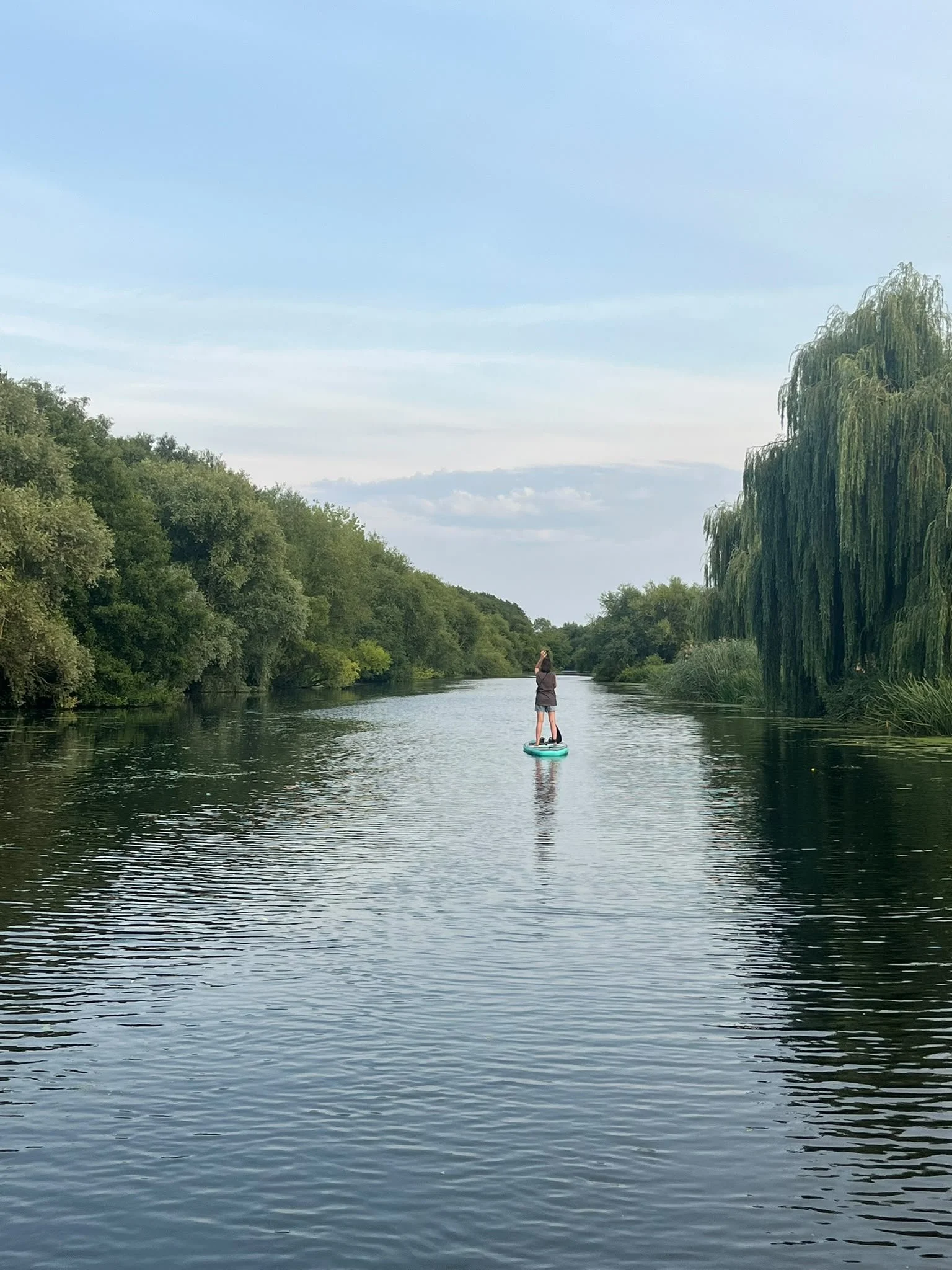
Out here, I am temporarily beyond their reach.
I can move freely through the world. I take my chances with e-coli because that is, for me, a safer bet than to be a woman, in public.
My body on the river at dusk. Women, briefly, unreachable.
Back home, everyone acquired a paddleboard or a kayak. Our weekend afternoons by the river stretched until bedtime. More families joined in. The big kids playing football on parched grass, adults taking turns to take a canoe of pre-schoolers back and forth, couples and friends pairing off for a quieter stretch of paddleboarding upstream.
My eldest paddling me across the river, where we see more varieties of mayfly, dragonfly, demoiselle fly than we can name or count. We watched them mate above the tangle of waterweeds that breach the surface.
Once, my friend and I slipped off the jetty, squirming as water lilies skimmed our tummies. When the water cleared, we floated for a while. And I thought about how beautiful she looked, in the sunlight and in this moment of pause.
I grew up next to this very river and the water was always off limits. The general feeling was that if you so much as dipped a toe in you would instantly get caught in a web of rusty shopping trolleys and catch a fatal waterborne disease. Unless you were on one of the private schools’ rowing teams, in which case the river was all yours.
Now I am living a life far beyond what I could actually imagine. Even though I moved back to the mid-sized town I left at eighteen and vowed never to return to. Even though I get itchy feet at least once a month and dream of flying off somewhere novel. Even though. Even though.
Even though now, I can just get into the water and go.
Like all of our waterways, my local river is, by any measure, a compromised body of water. Sewage overflows from water companies that have paid out billions in dividends while infrastructure collapses and untreated waste pours into rivers across the country. The water I paddle through has been violated. Treated as a resource to be exploited, a cheap receptacle for our collective waste and corporate malfeasance.
We have words for treating a body as a receptacle. For using it without consent. For assuming it exists to absorb whatever you choose to put into it.
I think about this as a I paddle. The same logic that says a natural body exists for profit, for convenience, for exploitation is not entirely unrelated to the logic that makes the footpath at dusk feel dangerous. The assumption that bodies are there to be moved through, used, and left.
And yet. I am still out here. In the compromised, shit-filled, beautiful river. Because it gives me a freedom I can’t find on land.
Earlier in the summer, my friend and I put our children to bed and paddled forty minutes upstream in the last of the light to an old pub on the riverbank. We wobbled ourselves onto their little jetty and straight into the beer garden. On the way home, the sun was setting. We noticed the footpaths that edge the river, enveloped by willows, the peaceful little clearings on the bank that would be such a quiet and tranquil place to pause on a walk.
But we would never walk those footpaths at dusk. And, to be completely honest, I’d be nervous on them in daylight too.
Yet, on the river, even in the crepuscular light, I feel safe.
And I feel safer on unpredictable, shit-filled bodies of water because men would need to swim to reach me.
This thought has occurred to me before, not for the first time, as I paddled upstream this week, that one of the reasons the water induces such a state of calm is because no man can reach me.
And still, I fear men. I fear them when I see them on a bridge above me. Will they drop something on me as I pass beneath?
My fear of their capacity for violence knows no bounds.
There are men who hang around in the park by the river; the men who are the reason I can’t sit on the grass and read a book on a sunny day.
Well, I have learned that these men will talk to you even as your are on the water. They will call to you at ten metres’ distance, to ask about currents and locks, to ask about your fitness, to ask about the ocean. They will see you when you feel your most free and serene, and they will interrupt it for no other reason than they can.
And yet.
Out here, I am temporarily beyond their reach.
I can move freely through the world. I take my chances with e-coli because that is, for me, a safer bet than to be a woman, in public.
My body on the river at dusk. Women, briefly, unreachable.
Make it stand out
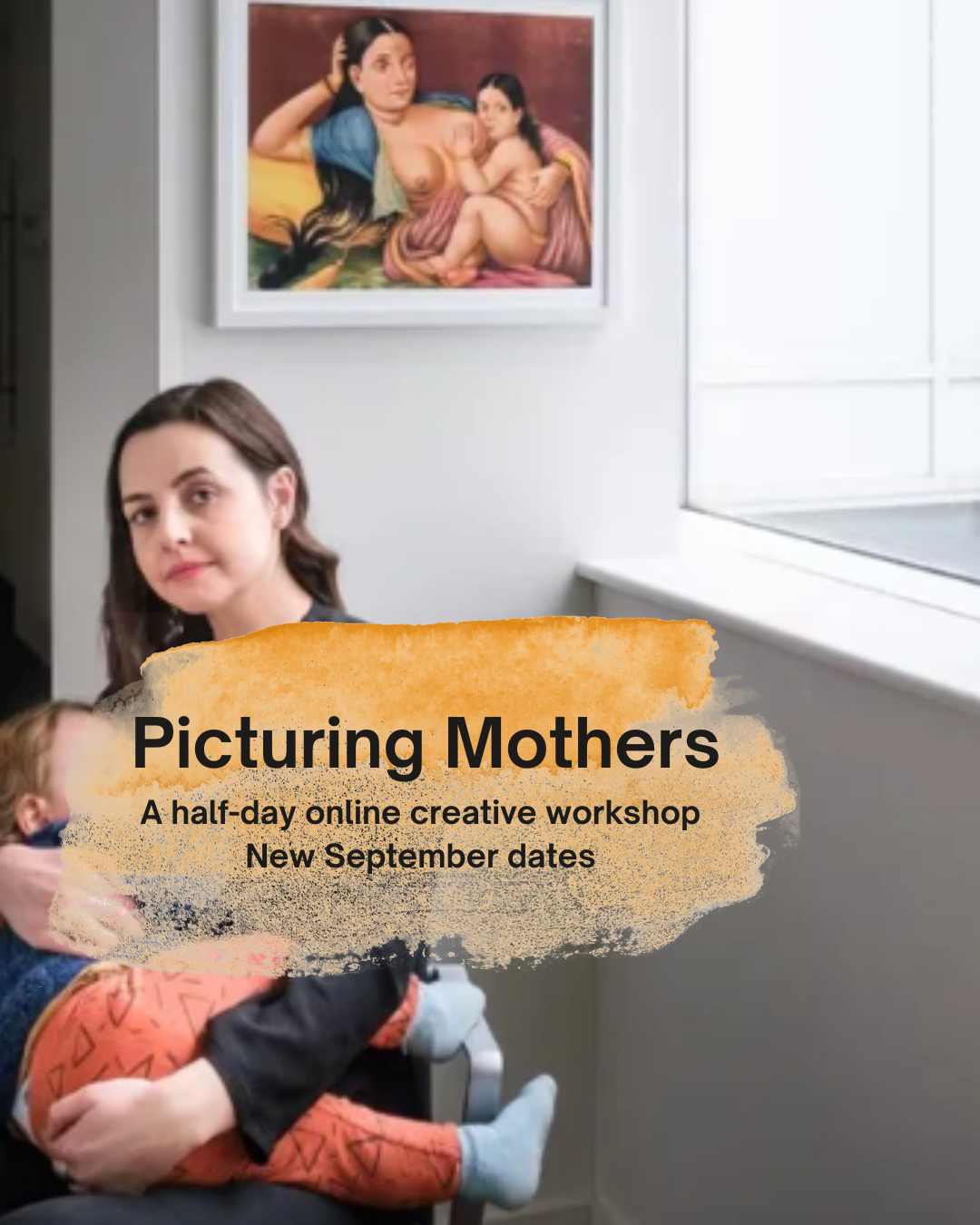
If you like the idea of thinking more about the body, freedom, what it means to move through the world as a woman, I’m running Picturing Mothers in September, a morning workshop exploring how motherhood and the female body have been represented, idealised and contested through art across cultures and history.
There are still a few tickets left for both dates:
Thursday 17th and Saturday 26th September, 10am–1pm UK time